
7am to 5pm, seven days a week when needed
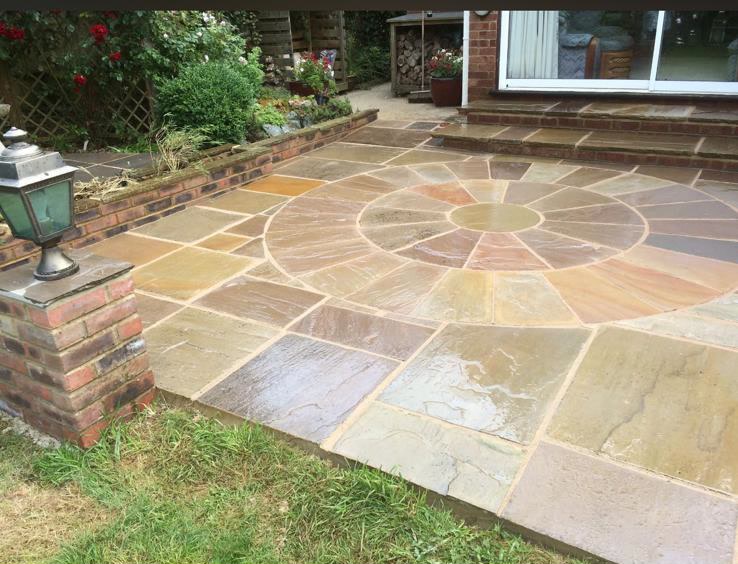
Indian sandstone patio with a circular stone feature and steps laid in a Kent garden

Patios In Kent LaidOn A Proper BaseAnd Set To Fall

A patio that stays flat, drains away from the house and does not rock underfoot comes down to the excavation, the sub-base and the bedding. We do all three, then lay the slabs to the lines and levels agreed with you on site.

25 years on the tools · Excavation and finish by the same team · Priced in person after a site visit · 10% deposit secures the booking

Get This Job Priced

Tell us the basics and Shane will arrange a visit to price it properly.

25 Years In The Trade

Hands-on experience behind every job Shane prices.

Qualified Plant Operator

NRSWA street works, full digger ticket, core drilling, ducting.

Priced In Person

Site visit first, real figure second. No guesses over the phone.

We Come Back If It's Not Right

No formal warranty period, a direct commitment from Shane.

The Service

Patios In Kent: What's Involved

What it is

Patio installation from the ground up: lifting the old surface or turf, digging out to depth, compacted sub-base, a full mortar or bonded bedding layer, slabs laid to line and fall, joints pointed, and edges and steps finished. We also build the retaining and step work that a sloping Kent garden usually needs to make a level terrace possible.

Who it's for

Homeowners putting in a new seating area, replacing slabs that have sunk, cracked or gone green, extending a patio to fit a dining table or hot tub, or levelling a sloping garden into usable terraces. It also covers paths, side returns and bin and shed areas.

When you need it

When slabs rock or ring hollow underfoot, when water pools in the middle of the patio or against the house wall, when joints have blown out and weeds are taking hold, when the level has risen too close to the damp-proof course, or when the space simply no longer suits how you use the garden.

Why it pays to get it right

Slabs spot-bedded on five dabs of mortar are the single most common cause of patio failure: the voids under them fill with water, freeze, and the slab cracks or lifts. A full bed, a real sub-base and correct falls are not extras, they are what stops you paying for the same patio twice.

What Happens If It's Left

The Problems That Get Worse And More Expensive

Water pooling against the house

A patio that sits level, or falls back towards the building, holds water at the base of the wall. Where the finished level is also too high against the damp-proof course, that water has an easy route into the brickwork. Falls and finished level are decided before a single slab is laid, and they are not something you can correct afterwards without lifting the lot.
Rocking, cracked and hollow slabs

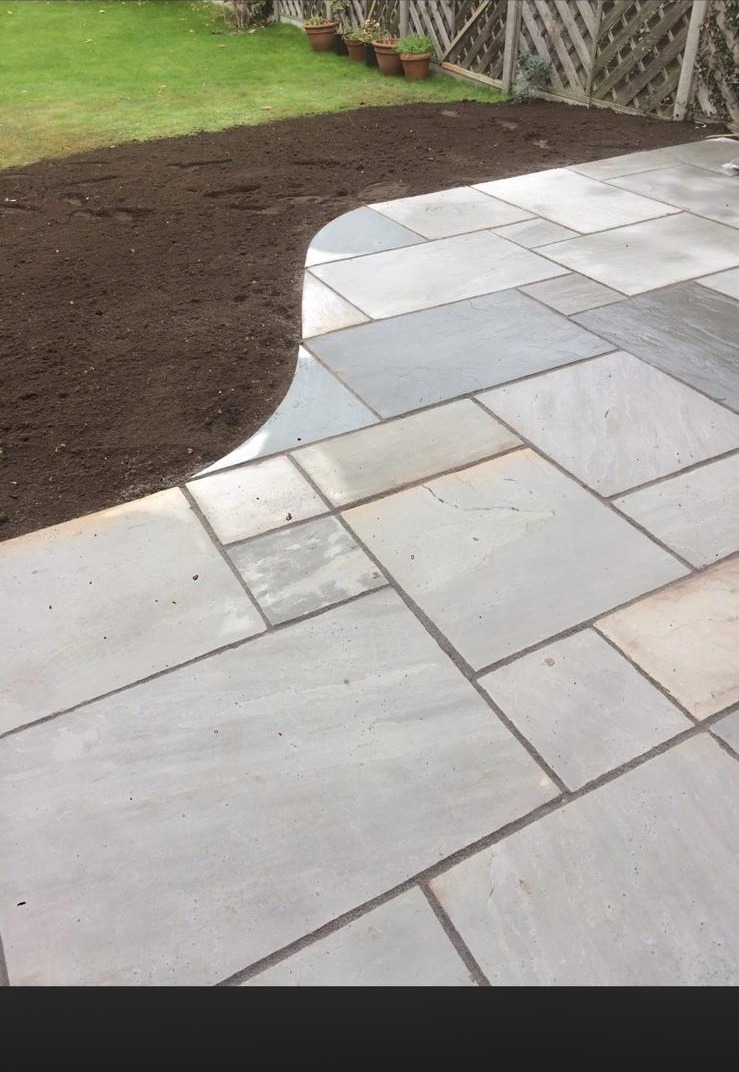
Spot bedding leaves voids under the middle of the slab. Someone stands on it, it flexes, and it cracks. Water gets into the void, freezes in winter and pushes the slab up. Once one goes, the ones around it start moving too, because the bedding was never continuous in the first place.

Weeds, moss and blown joints

Poorly filled or under-specified joints wash out, and the open gap becomes a seed bed. Moss follows on the shaded, wet side of a Kent garden and the surface turns slippery. Repointing a patio that is still moving underneath is money spent twice, the joints will only hold if the slabs below them are solid.

Our Process

How The Job Runs, Step By Step

  1. Step 1

    Site visit and layout

    We walk the garden with you, take levels against the house and the lawn, check the damp-proof course, look at access for materials and muck away, and agree the shape, size and slab. You get a price for that patio.

  2. Step 2

    Dig out and muck away

    Turf or the old patio is lifted and the area dug out to the depth needed for sub-base, bedding and slab thickness. Spoil is removed from site. On sloping ground this is also where we set out any retaining or step work.

  3. Step 3

    Sub-base and falls

    Compacted hardcore goes in and is whacked in layers, with the fall pulled away from the house at the gradient the surface needs. Any drainage channel, gully or downpipe connection is set at this point.

  4. Step 4

    Full-bed laying and cutting in

    Slabs are laid on a full bed, tapped to line and level, and cut accurately around corners, steps, manholes and thresholds. Covers are recessed or framed neatly rather than left proud.

  5. Step 5

    Pointing, clean down and walk round

    Joints are filled and finished, the surface is washed down, the garden is cleared and we walk it with you. If anything is not right after completion, you call and we come back.

What You Get

The Difference It Makes

No rocking slabs

Full-bed laying removes the voids that cause flex, cracking and frost lift.

Water runs away from the house

Falls and finished level are set against the damp-proof course at base stage.

Level space in a sloping garden

Retaining and step work is built in as part of the same job, by the same team.

Hot tub and furniture ready

Tell us the intended load at the visit and the base build-up is specified for it.

Clean edges and cuts

Cuts at thresholds, corners and covers are set out rather than improvised at the end.

Less maintenance

Properly filled joints on a solid base mean far less weeding, resanding and repointing.

In Detail

Materials, Methods And The Things That Matter

Slab types and what they demand

Indian sandstone remains the most common choice in Kent gardens: warm, riven, forgiving on cuts, but porous and prone to greening in shade unless sealed and cleaned. Porcelain is dense, colour-stable, stain-resistant and almost non-porous, which is exactly why it must be laid on a full bed with a slurry primer, it has no absorbency to help the mortar grip. Limestone gives a flatter, more uniform look. Concrete and riven reproduction slabs are cost-effective and consistent in thickness, which speeds laying. Granite setts and block paving suit paths, aprons and borders. Thickness, porosity and calibration all change the bedding and the cutting, so the slab is agreed before the dig depth is fixed.

Bedding, priming and jointing

A full mortar bed supports the whole slab and is the standard we work to. Porcelain and dense stone additionally need a slurry primer on the underside so the mortar bonds to the slab rather than simply sitting under it. Jointing is chosen for the slab and the joint width: cement mortar pointing where appropriate, or a resin-based brush-in compound where a consistent, weed-resistant joint is wanted. Jointing compounds have minimum joint widths and temperature ranges, which is one reason a patio in the middle of a hard frost or driving rain is worth pausing on rather than rushing.

Falls, drainage and the damp-proof course

A patio needs a positive fall away from the building so surface water has somewhere to go, and the finished surface should sit clear of the damp-proof course. Where a patio has to meet a threshold at level: for bi-fold doors, for example, that is handled with a linear channel drain or a recessed threshold drain directly in front of the opening, connected away from the wall. Downpipes, gullies and any existing surface water drainage are picked up during the base work while the ground is still open.

Steps, retaining walls and sloping gardens

Most gardens are not flat. Creating a usable terrace usually means cutting into the slope on one side and retaining on the other, with steps linking the levels. Retaining structures need foundations, drainage behind them and weep holes so water pressure does not build up in the retained ground, a retaining wall with nowhere for water to go is a wall that will eventually move. Steps need consistent rise and going so they are comfortable and safe to use in the dark. Because we are groundworkers, the excavation, the foundations and the paving are one continuous job rather than three separate trades.

Questions

Patios: Frequently Asked

How much does a patio cost?

Every patio is priced after an in-person site visit. Area, depth of dig, spoil removal, access, slab choice and any steps or retaining work all move the figure, so Shane prices your patio rather than quoting an average.

How long does a patio take to lay?

Most domestic patios are a matter of days on site. Sloping gardens that need retaining walls or steps take longer, and you will be given a realistic duration at the site visit.

Can you lay a patio over an existing one?

It is rarely a good idea. Laying over the top raises the finished level, often too close to the damp-proof course, and it inherits whatever movement and drainage problems the old patio already had. We would normally lift it and build properly from the base up.

Will the patio drain properly?

Yes. A positive fall away from the house is set during the base work, and where a level threshold is needed we install a channel drain in front of it so water is taken away rather than sitting against the wall.

Can you lay porcelain?

Yes. Porcelain is laid on a full bed with a slurry primer on the underside, which is what it needs to bond properly. Cutting porcelain is slower than sandstone and that is reflected in the price.

Can the patio take a hot tub?

Tell us at the site visit and the base is specified for the load, a filled hot tub with people in it is a significant weight in a small footprint, and it needs a stronger build-up than a standard seating area.

Do you take away the old patio and the spoil?

Yes. Breaking out, lifting and removing the old surface and the excavated spoil is part of the job.

What if a slab moves later?

You call and we come back and sort it. There is no formal written warranty period; it is a direct commitment from Shane rather than a certificate.

What time of year is best for patio work?

We work year round, 7am to 5pm and seven days a week when a job needs it. Hard frost and prolonged heavy rain affect mortar and jointing compounds, so occasionally the sensible call is to wait a day rather than lay in conditions that will compromise the finish.

Do you cover my part of Kent?

We work across Kent, from Maidstone and Medway to Canterbury, Ashford, Sevenoaks, Tunbridge Wells, Dartford and Gravesend. Call and ask if you are not sure.

Where We Cover

Patios across Kent. If your town isn't listed it's still worth a call, travel depends on the job as much as the postcode.

  • Maidstone
  • Ashford
  • Canterbury
  • Tunbridge Wells
  • Sevenoaks
  • Sittingbourne
  • Faversham
  • Medway (Chatham, Rochester, Gillingham)
  • Dartford
  • Gravesend
More about our Kent coverage

Get Your Patio Priced In Person

Send a sentence about the garden or call Shane directly. Site visit, straight price, and a start date once a 10% deposit secures the booking.

7am to 5pm, seven days a week when needed. 10% deposit secures your booking; the balance is settled on completion.

Call NowGet an Estimate