7am to 5pm, seven days a week when needed
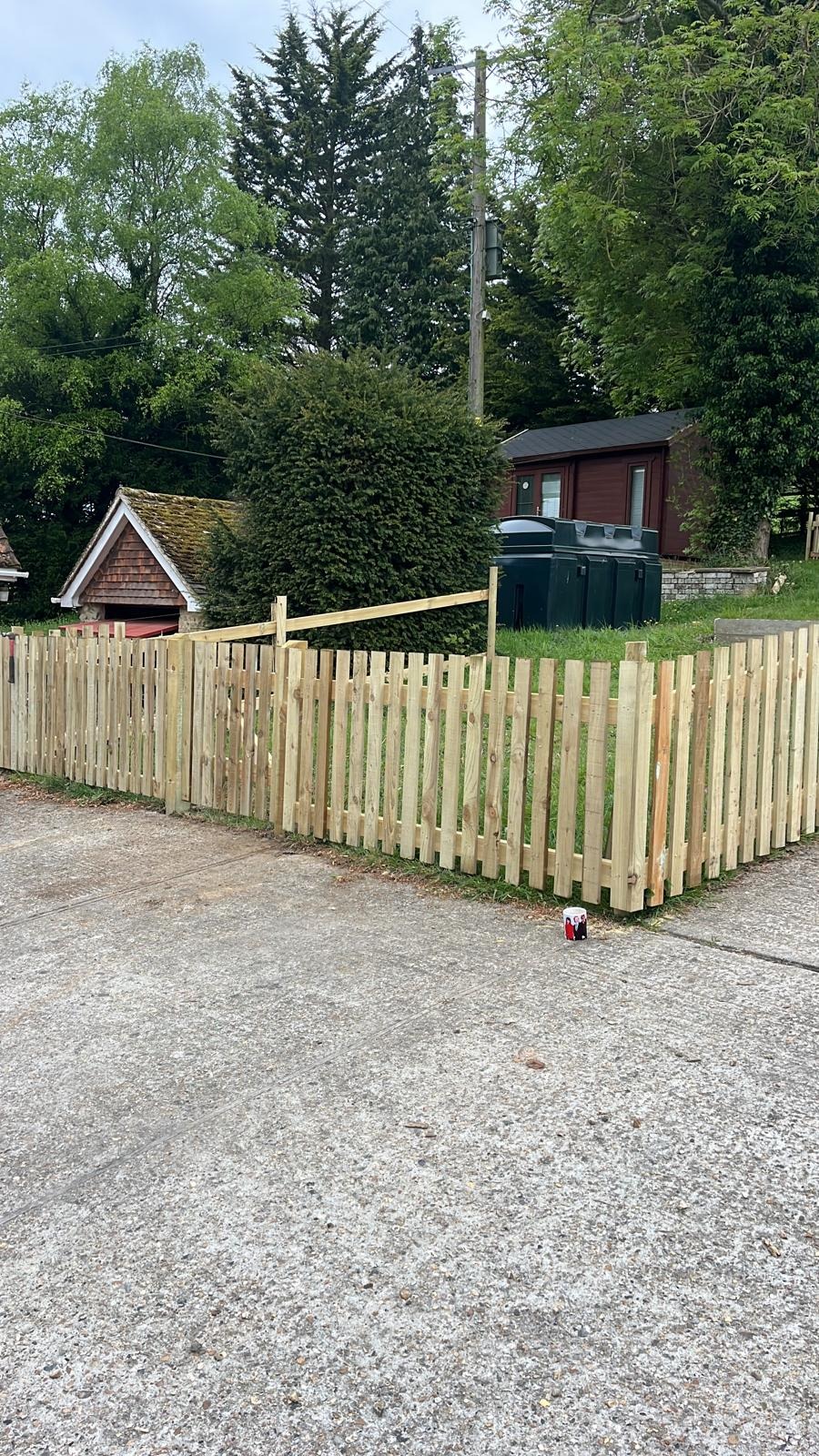
New timber picket fencing installed along a driveway boundary in Kent

Fencing In Kent WithPosts Set Solid AndLines Run Straight

A fence stands or falls on what is under the ground. Posts dug to depth and concreted in, gravel boards keeping timber off the soil, and levels taken properly across a sloping garden, that is the difference between a fence that survives a Kent gale and one that leans by spring.

25 years on the tools · Posts concreted, not rammed with soil · Priced in person after a site visit · 10% deposit secures the booking

Get This Job Priced

Tell us the basics and Shane will arrange a visit to price it properly.

25 Years In The Trade

Hands-on experience behind every job Shane prices.

Qualified Plant Operator

NRSWA street works, full digger ticket, core drilling, ducting.

Priced In Person

Site visit first, real figure second. No guesses over the phone.

We Come Back If It's Not Right

No formal warranty period, a direct commitment from Shane.

The Service

Fencing In Kent: What's Involved

What it is

Supply and installation of garden and boundary fencing: removing and disposing of the old fence, digging or augering post holes to depth, setting posts in concrete, fitting gravel boards, panels, close board or feather edge, capping and trims, and hanging gates with the ironmongery to match. Line and level are set out with string before anything is fixed.

Who it's for

Homeowners replacing a storm-damaged or rotten boundary, anyone wanting more privacy or a windbreak, people fencing off a garden for children or dogs, new-build owners upgrading builder-grade panels, and small commercial or yard sites needing a secure perimeter.

When you need it

After wind damage, when posts have rotted at ground level and the fence rocks when you push it, when panels are splitting or falling out of the arris rails, when a boundary needs re-establishing, or when you are landscaping and want the fence done before the paving and planting.

Why it pays to get it right

Most fence failures happen in the same place: the post, at ground level, where timber meets wet soil. Depth, concrete, the post material and keeping panel timber clear of the ground decide how long the fence lasts far more than the panel style you choose.

What Happens If It's Left

The Problems That Get Worse And More Expensive

Shallow posts go over in the first real gale

A fence is a sail. Wind load on a tall close-boarded run is considerable and it is all transferred into the posts. Posts set too shallow, or packed with soil and rubble instead of concrete, lever out of the ground in the first serious storm, usually taking the panels and sometimes the neighbour's shrubs with them.

Timber sitting on wet soil rots from the bottom up

Where panels or boards sit directly on the ground they stay permanently damp, and rot creeps upwards from the bottom edge. Within a few years the panel is sound at the top and crumbling at the base. A concrete gravel board takes the soil contact instead and keeps the timber clear of it.

Ignoring the slope leaves gaps and a crooked line

Dropping standard panels down a sloping garden without stepping or racking them leaves triangular gaps under each panel, enough for a dog to get through and enough to look wrong from the house. Levels and the stepping detail need setting out before the first post goes in, not improvised halfway along the run.

Our Process

How The Job Runs, Step By Step

  1. Step 1

    Site visit and set out

    We measure the run, check the boundary line, look at ground conditions, access and what is buried nearby, discuss height and style, and confirm who owns which boundary. You get a price for the run.

  2. Step 2

    Take down and clear the old fence

    The existing fence, panels, posts and concrete footings are removed and taken off site. Old concrete lumps left in the ground are dug out rather than worked around, because they get in the way of setting the new posts on line.

  3. Step 3

    Post holes dug to depth and concreted

    Holes are dug to the depth the fence height requires, posts are plumbed, lined and braced, and concreted in. Spacing is set from the actual panel or board dimensions so nothing has to be forced or cut short at the end of the run.

  4. Step 4

    Gravel boards, panels and gates

    Gravel boards go in to keep timber off the soil, panels or close board and rails are fitted to the string line, and gates are hung square with hinges, latches and stops that suit the weight and how often it will be used.

  5. Step 5

    Caps, clear down and walk the line

    Post caps and trims are fitted, the ground is raked off and the site cleared, and we walk the run with you. If something is not right afterwards, you call and we come back.

What You Get

The Difference It Makes

Stands up to wind

Post depth and concrete footings are matched to the fence height and exposure.

Longer timber life

Gravel boards keep panel and board timber out of permanent contact with wet soil.

Straight, level lines

Runs are strung and set out before fixing, including stepped detail on sloping ground.

Gates that keep working

Hung square with ironmongery chosen for the weight and daily use rather than what is in the box.

Old fence taken away

Removal and disposal of the existing fence and its footings is part of the job.

Fits the wider job

Sequenced with driveway, patio or decking work so nothing gets damaged or done twice.

In Detail

Materials, Methods And The Things That Matter

Fence types and where each one earns its place

Lap panels are the economical choice for a sheltered rear boundary and are quick to replace individually. Close board, vertical feather edge boards fixed to arris rails between posts, is heavier, far more robust and much better suited to exposed Kent boundaries; it can also be built to follow a slope smoothly rather than stepping. Slatted and contemporary horizontal fencing suits garden design work but needs strong, well-spaced posts because the fixings carry more leverage. Picket and post-and-rail suit front boundaries and paddock or field edges. Trellis on top adds height and privacy while letting wind through, which reduces load on the posts compared with a solid panel of the same height.

Posts, footings and depth

Timber posts are traditional and look right with timber panels, but they are the first component to fail because the rot starts at the soil line. Concrete posts outlast timber by a wide margin and let damaged panels be slid in and out without touching the structure. Steel post systems are another option on modern fencing. Whichever is used, the hole depth relates to the fence height: the taller the fence, the deeper and wider the footing, and the post is concreted, plumbed and braced rather than packed with soil. Digging is done carefully where services may run near a boundary, and on ground where an old footing sits in the way it is dug out rather than shifting the post off line.

Boundaries, heights and neighbours

Boundary ownership and any covenants are the property owner's responsibility, and it is worth checking your deeds before work starts, we will always ask at the site visit which side is yours. Height limits, particularly at a front boundary or adjacent to a highway, are a matter for your local authority's planning rules, and any permission needed is the customer's responsibility. Practically, it is also worth a conversation with the neighbour before the day: replacing a shared boundary goes far more smoothly when both sides know when the old fence is coming down and what is going back up.

Gates, ground conditions and residential versus commercial

Gates are where fencing jobs are won or lost. A gate post carries the full weight of the gate as a cantilever, so it is set deeper and often thicker than the line posts, and heavy or wide gates may need bracing or a drop bolt and stop. Ground clearance is set so the gate still swings when the ground heaves in winter. On yards and small commercial sites the same principles apply with higher specification: taller close board or steel-framed panels, heavier posts, deeper footings, and gates sized for vehicle access. Because we work with a machine and understand ground conditions, difficult digs: clay, chalk, old concrete, made ground, are part of the job rather than a reason to shorten the footing.

Questions

Fencing: Frequently Asked

How much does new fencing cost?

It is priced after a site visit. The cost depends on the length of the run, the height, the fence type, post material, ground conditions, access, gates and removing the old fence, so Shane measures it and prices your run rather than quoting per panel over the phone.

How long does a fence take to install?

A typical domestic boundary is usually completed quickly once the old fence is out and the posts are in. You will be given a realistic duration at the site visit, and the start date goes in the diary once the deposit is paid.

Do you take away the old fence?

Yes. The old panels, posts and concrete footings are removed and taken off site as part of the job.

How deep do the posts go?

Depth is set by the height and exposure of the fence, the taller the fence, the deeper and wider the footing. Posts are concreted in, plumbed and braced, never packed with soil and rubble.

Concrete posts or timber posts?

Concrete posts last considerably longer because they do not rot at the soil line, and they let a damaged panel be slid out and replaced without disturbing anything else. Timber posts look more traditional. We will give you our honest view for your boundary at the visit.

Can you fence a sloping garden?

Yes. Levels are taken and the run is either stepped or, with close board, raked to follow the ground so you are not left with gaps under the panels.

How tall can my fence be?

Height limits, especially at a front boundary or next to a highway, are governed by your local authority's rules, and any permission required is the customer's responsibility. Tell us the height you want and we will build to it.

Can you fit a gate as well?

Yes. Gate posts are set deeper and heavier than the line posts because they carry the whole weight of the gate, and the ironmongery is chosen for the gate size and how often it is used.

What if the fence moves or a panel fails later?

You call and we come back and sort it. There is no formal written warranty period; it is a direct commitment rather than a certificate.

Which parts of Kent do you fence in?

Across Kent, including Maidstone, Medway, Canterbury, Ashford, Sittingbourne, Faversham, Sevenoaks, Tunbridge Wells, Dartford and Gravesend.

Where We Cover

Fencing across Kent. If your town isn't listed it's still worth a call, travel depends on the job as much as the postcode.

  • Maidstone
  • Ashford
  • Canterbury
  • Tunbridge Wells
  • Sevenoaks
  • Sittingbourne
  • Faversham
  • Medway (Chatham, Rochester, Gillingham)
  • Dartford
  • Gravesend
More about our Kent coverage

Get Your Fencing Priced In Person

Tell us the length and height, or call Shane directly. Site visit, straight price, and a start date once a 10% deposit secures the booking.

7am to 5pm, seven days a week when needed. 10% deposit secures your booking; the balance is settled on completion.

Call NowGet an Estimate