7am to 5pm, seven days a week when needed
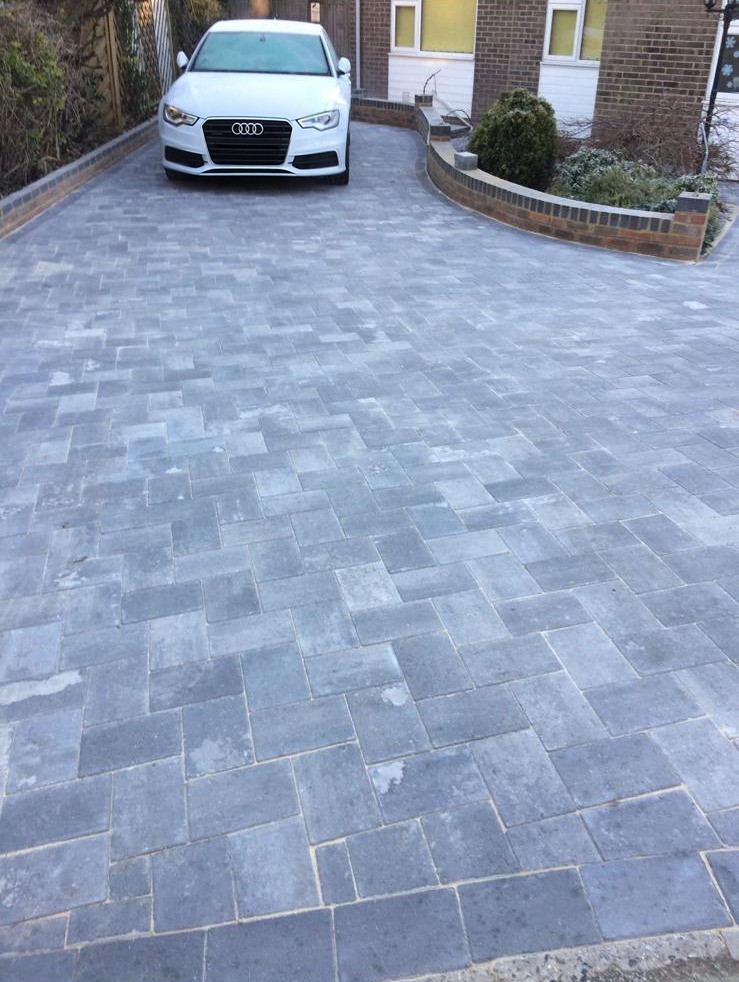
Newly laid block paving driveway completed by SMB Groundworks and Servicing in Kent

Driveways In KentDug Out And Based Properly,Not Just Surfaced

A driveway is only as good as what is underneath it. We excavate to the right depth, lay a compacted sub-base, sort the falls and drainage, then finish in the surface you have chosen, so the drive still sits flat and drains years after it is laid.

25 years on the tools · Full digger ticket · Priced in person after a site visit · 10% deposit secures the booking

Get This Job Priced

Tell us the basics and Shane will arrange a visit to price it properly.

25 Years In The Trade

Hands-on experience behind every job Shane prices.

Qualified Plant Operator

NRSWA street works, full digger ticket, core drilling, ducting.

Priced In Person

Site visit first, real figure second. No guesses over the phone.

We Come Back If It's Not Right

No formal warranty period, a direct commitment from Shane.

The Service

Driveways In Kent: What's Involved

What it is

A driveway installation covers everything from breaking out the old surface to the finished, trafficked drive: excavation and muck away, a compacted MOT Type 1 sub-base, edge restraints, drainage and falls, then the surface itself in block paving, slabs, resin-bound, tarmac, gravel or concrete. Because we are groundworkers first, the dig and the base are done by the same team that lays the finish.

Who it's for

Homeowners in Kent replacing a cracked, sunken or weed-ridden drive, widening a drive for a second car, converting a front garden to off-street parking, or putting a new drive in as part of a wider build. It also suits landlords and small commercial sites that need parking that will stand up to daily use.

When you need it

When water sits on the surface after rain, when blocks have rutted or dipped under wheel tracks, when weeds are coming through faster than you can treat them, when the drive has sunk against the threshold of the house, or when you simply need more parking than you have now.

Why it pays to get it right

Most failed driveways are not a surface problem. They are a base problem: not deep enough, not compacted in layers, no edge restraint, or no thought given to where the water goes. Getting that right needs a machine, someone who can operate it, and someone who understands levels and falls. That is the part we do every day.

What Happens If It's Left

The Problems That Get Worse And More Expensive

Standing water finds its way inside

A drive laid flat, or falling towards the house, sends rainwater at your threshold and walls instead of away from them. Over a wet Kent winter that means damp at the base of the brickwork and water tracking under the door. It is far cheaper to set the falls right at the start than to chase damp afterwards.

A thin base ruts under a car and keeps moving

A car concentrates a lot of weight on four small contact patches. Where the sub-base is too shallow or was never compacted in layers, the surface dips in the wheel tracks and the dips gather water, which softens the ground further. Each winter the movement gets worse and relaying the surface alone will not stop it.

No edge restraint means the whole drive spreads

Block paving relies on being held tight at the perimeter. Without a properly haunched edge course, the outside blocks creep outwards, joints open, sand washes out and weeds and ants move straight into the gaps. It is one of the most common mistakes on a cheap drive and it shows within a season or two.

Our Process

How The Job Runs, Step By Step

  1. Step 1

    Site visit and measure up

    Shane comes to the property, looks at the existing surface, ground conditions, access for plant and muck away, where the water currently goes, and the levels against the house and the pavement. You get a price for your drive, based on what is actually there.

  2. Step 2

    Excavation and muck away

    We break out and dig off the old surface to the depth the finish and traffic require, with a tracked machine where access allows and by hand where it does not. Spoil is loaded and taken off site, and any services found in the dig are exposed carefully and worked around.

  3. Step 3

    Sub-base, edgings and drainage

    Compacted sub-base goes in and is whacked in layers rather than one deep dump. Edge restraints are set on concrete and haunched, falls are pulled away from the house, and any linear drainage, gullies or ducting runs are installed at this stage while the ground is open.

  4. Step 4

    Laying the surface

    The chosen finish is laid to the string lines and levels set out: laying course screeded, blocks or slabs cut in at the edges and around covers, resin or tarmac laid to the manufacturer's spec, concrete poured and finished.

  5. Step 5

    Finish, clear and walk round

    Joints are filled and compacted, covers reset, the site swept and cleared, and we walk the drive with you before we leave. If something is not right after we have finished, you call and we come back and sort it.

What You Get

The Difference It Makes

Parking you can use from day one

Most domestic drives are a matter of days on site, not weeks, with the surface trafficable as soon as the finish allows.

Water goes where you want it

Falls, gullies and soakaway or drainage detail are designed in at base stage rather than patched on afterwards.

One trade for dig and finish

No waiting on a groundworker and then a paver, and no argument about whose work settled if anything moves.

Built to carry vehicles

Depths and compaction are set for the traffic the drive will actually take, including vans and larger vehicles.

Ducting laid while the ground is open

EV charger cable routes, lighting or garden power ducts can be run during the dig instead of cutting the drive later.

A price that holds

Because the job is priced in person after a site visit, the figure reflects your ground, access and finish.

In Detail

Materials, Methods And The Things That Matter

Surface options and what each one suits

Block paving is the workhorse for Kent driveways: individual units flex slightly with ground movement, damaged blocks can be lifted and replaced, and permeable blocks with an open-graded sub-base let water through on their own. Riven and sawn slabs give a cleaner, more contemporary front but need accurate levels and full bedding. Resin-bound gravel gives a seamless, weed-resistant finish laid over a solid base of concrete or tarmac. Tarmac is quick and cost-effective across larger areas. Loose gravel is the cheapest per square metre and works well with a proper grid and edging to stop it migrating into the road. Concrete suits hard-use and commercial parking. Which one is right depends on your budget, the property, slope and how much traffic the drive takes, we will tell you straight at the visit.

Sub-base, depth and compaction

A domestic drive typically needs the ground reduced well below finished level to allow for sub-base, laying course and the unit thickness. The sub-base is laid and compacted in layers with a plate or roller, because a single deep layer will never consolidate properly all the way down. On soft, clay-heavy or made ground, common across parts of Kent, depth may need increasing or a geotextile membrane introduced between subgrade and stone to stop the two mixing over time. This is the part you never see and the part that decides whether the drive is still flat in ten years.

Drainage, permeability and falls

Rainwater running off a new impermeable drive must not discharge onto the public highway. That is dealt with by falling the surface to a permeable area within the property, installing a linear channel drain across the entrance or at the house edge, or using a permeable surface build-up that drains through into the sub-base. Falls also matter close to the house: the finished surface should sit clear of the damp-proof course and run away from the wall. We set this out at base stage, with the channel and gully positions agreed with you before anything is laid.

Dropped kerbs, access and residential versus commercial

Creating a new vehicle crossover from the road means work on the public highway, which is why the NRSWA street works qualification matters, the crossover itself requires the local authority's permission and their process. On the domestic side, we deal with access for the machine and the muck away lorry, protecting the pavement, and working around parked cars and neighbours. Commercial and yard parking is the same set of principles with heavier loadings: deeper sub-base, stronger edge detail and surfaces chosen for repeated turning and heavier axle weights.

Questions

Driveways: Frequently Asked

How much does a new driveway cost in Kent?

There is no rate card. Every driveway is priced individually after an in-person site visit, because the cost is driven by size, depth of dig, how much spoil is going off site, access for plant, drainage and the surface you choose. Shane comes out, looks at it, and gives you a straight figure for your drive.

How long does a driveway take?

A typical domestic drive is measured in days rather than weeks. The dig and base are the bulk of the work; the surface follows once the base is right. At the site visit you get a realistic duration for your job, and the start date goes in the diary once the deposit is paid.

Do you take a deposit?

Yes. A 10% deposit is taken once you confirm you want to go ahead, and that secures your slot in the diary. The balance is settled on completion.

What guarantee do I get?

There is no formal written warranty period. The commitment is simple: if something is not right after we have finished, you call and Shane comes back and puts it right.

How long will the driveway last?

A drive built on a correctly dug and compacted base, with proper edge restraint and drainage, should give many years of service with only routine cleaning and occasional jointing sand top-ups. Drives that fail early almost always fail because of the base, not the surface.

Can I park on it straight away?

It depends on the finish. Block paving and slabs can generally take traffic very soon after completion. Resin, tarmac and concrete each need their own curing or cooling time, and we will tell you exactly how long to stay off yours before we leave site.

Can you run a cable for an EV charger?

Yes. Ducting can be laid during the dig so the cable route to your parking space is in place before the surface goes down. The electrical connection itself is carried out by your electrician. Tell us at the site visit and we will allow for it.

Do you remove the old driveway?

Yes. Breaking out the existing surface and taking the spoil off site is part of the job and is included in the price you are quoted.

Do you work at weekends?

We work 7am to 5pm, seven days a week when a job needs it. If timing is tight, say so at the visit and we will be straight with you about what is possible.

Which parts of Kent do you cover?

Across Kent, including Maidstone, Medway, Canterbury, Ashford, Sittingbourne, Faversham, Tunbridge Wells, Sevenoaks, Dartford and Gravesend. If your town is not listed it is still worth a call; travel depends on the job as much as the postcode.

Where We Cover

Driveways across Kent. If your town isn't listed it's still worth a call, travel depends on the job as much as the postcode.
  • Maidstone
  • Ashford
  • Canterbury
  • Tunbridge Wells
  • Sevenoaks
  • Sittingbourne
  • Faversham
  • Medway (Chatham, Rochester, Gillingham)
  • Dartford
  • Gravesend
More about our Kent coverage

Get Your Driveway Priced In Person

Send the details or call Shane directly. You get a site visit, a straight price for your drive, and a start date once a 10% deposit secures the booking.

7am to 5pm, seven days a week when needed. 10% deposit secures your booking; the balance is settled on completion.

Call NowGet an Estimate